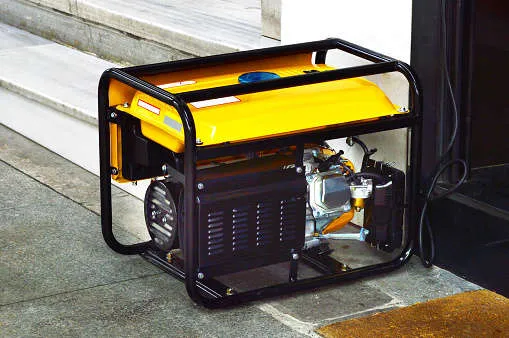
Looking to purchase a new generator but you’re not sure what fuel type to choose? Gasoline, Propane, Diesel, Hybrid? Depending on your situation, each fuel has advantages and disadvantages. So I have gone ahead and laid out a simple list of pros and cons for each type. Make sure to check out my other posts – Gasoline Generators: Pros and Cons, as well as Diesel Generators: Pros and Cons.
Propane-fueled generators burn very clean, have a long life with little maintenance required, and produce the lowest amount of noise when compared to gasoline or diesel. These qualities make them great for homes where the generator is in close proximity to the house, or there are kids and pets around. However, they do have some drawbacks including limited power output, less efficiency, and bulky fuel storage tanks. I think they’re great options for homes that have large propane tanks, as it gives you a large source of fuel and propane doesn’t have an expiration date like gasoline or diesel. So if you’re looking for an off-grid generator, and you plan on having a large propane tank, a propane generator is a great option.
Propane generators have low maintenance cost because of how clean-burning propane fuel is. When compared to gasoline or diesel, propane is clean burning, meaning it does not let off nearly as much carbon monoxide when fully burned, and it cannot “spill”, allowing the generator to run much smoother. Typically, the dirtier the fuel the more maintenance is required to keep your generator in fully working condition. Propane generators also do not require special maintenance during winter months, whereas gasoline and diesel can give you more trouble.
Noise
Propane generators produce less noise than gasoline or diesel generators, which may be a decisive point if you’re purchasing a generator that will be in close proximity to your house, or for use when camping. It may seem like a small detail, but if you’ve ever been in a situation where you need to run a generator for multiple hours, let alone overnight, you know how much noise they can produce. Any amount of noise-dampening can be beneficial. Check out my article on how quiet propane generators are for more information.
Fuel Tank Size
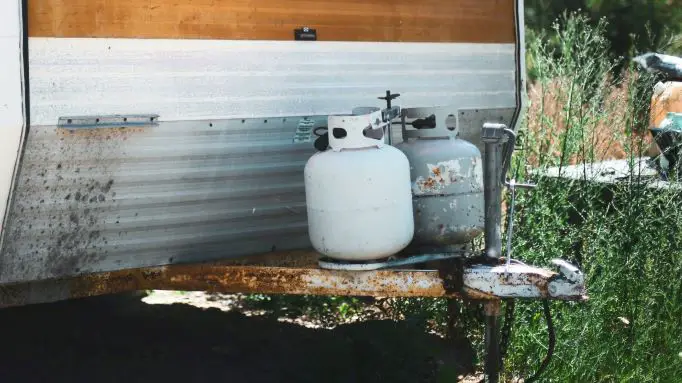
There are several fuel tank sizes available for propane ranging from portable 20lb tanks all the way up to 1000-gallon permanent tanks. Depending on the size of your tank, a propane generator could easily outlast its gasoline/diesel counterpart. For example, if your home has a 500-gallon tank (which only contains 400 gallons of usable LPG, as there are fewer gallons of propane in a propane tank than the size) and you have a 7500-watt generator that consumes around 1.5 gallons/hour, you could run your generator nonstop for 250 hours. It’s also nice that you may already have a 20lb propane tank that you use for your BBQ or other appliances, so if you’re off in an RV that utilizes propane and you don’t want to carry a tank of gasoline or diesel, you can connect your propane tank.
Long Shelf Life
Propane gas does not deteriorate similar to gasoline or diesel, there is no expiration date, whereas gasoline can typically only be stored for 6 months. The tank that is holding the LPG will deteriorate quicker than the propane inside, so for long-term storage, LPG generators are a great option. For example, if you have a cabin that you want to keep a generator at, but don’t want to haul fuel back and forth, utilizing a generator that runs on propane you could theoretically store the propane there and use it whenever you need. And this paired with the flexibility of having large fuel tanks, you could have a large propane tank to have enough fuel for any difficult condition without the worry of needing to purchase gasoline or diesel.
Low Carbon Footprint
Propane is a clean burning fuel, meaning it does not emit nearly as much carbon when fully burned unlike gasoline or diesel. Its clean burning fuel makes it the best choice for use close to homes with children and pets that may be near the generator. Moreover, propane generators don’t produce ash like diesel ones, which aids in the reduction of maintenance required. Propane also cannot spill onto the ground, or seep into the earth. When released into the air, propane becomes gaseous and vaporizes.
Works in Extreme Cold
In extremely cold conditions, a propane generator is very reliable as the freezing point of propane is very low, unlike gasoline and diesel. In conditions that reach below freezing, gasoline and diesel generators can have a hard time starting and can also require additional maintenance such as using different oil, adjusting the choke, and special engine starting aerosols. It’s not until temperatures reach around -44 degrees Fahrenheit that you’ll begin having issues with propane. The largest concern with propane in freezing conditions is the regulator. If this freezes, it will not let propane through and will need to be defrosted.
Propane generators are reliable and require little maintenance over the course of their life, but their upfront cost can be higher than gasoline or diesel generators. You will not need to change out the generator’s oil as often as gasoline or diesel, but typically generators that can run on propane cost more than generators that only run on gasoline or diesel. You also need to already have a propane tank, or you will need to purchase one. Propane typically cost less than gasoline, however, due to the limited BTUs/gallon, it may end up costing more as a fuel source.
Produces Less Power
Propane generators produce less power or watts than gasoline or diesel generators. Propane generators typically produce between 10%-30% fewer watts than gasoline or diesel generators. That’s why the fuel economy of propane generators is also less. So if you’re on a site where you will have high wattage demand, such as a construction site, it may be more beneficial to choose a gasoline generator.
Less Fuel Efficient
Propane generators produce fewer BTUs per gallon of fuel, which makes them less fuel efficient compared to gasoline or diesel generators. A gallon of propane contains around 91,000 BTUs whereas gasoline is around 120,000 BTUs, and diesel at 140,000. Due to this, running a generator at 100% load will require significantly more fuel when using propane vs gasoline or diesel. However, it is typically easier to have larger tanks of propane than gasoline. A typical 20lb propane tank will run a 7500 watt generator for 3-4 hours at 50% load, whereas that same generator running gasoline with a fuel tank size of 6.6gal can run for 8-9 hours.
Propane generators demand heavy external tanks to store propane whereas most gasoline and diesel generators have internal reservoirs. Furthermore, if you’re planning on using a larger permanent tank you need an expert to install the plumbing between the tank and the generator.
Fuel is Not Always Accessible
Propane gas is usually not accessible at all gas stations and not distributed to households like natural gas lines are. In case of an emergency, it might be tough to find, unlike gasoline or diesel which are available almost everywhere at any time. Even if your local gas station has a propane tank cage, they may run out or have delivery issues. Depending on your location, gasoline may be an easier fuel source to obtain. However, most modern-day gasoline pumps require electricity to run. So if there is a major power outage, gasoline can even be difficult to acquire.
Final Remarks
Hopefully, with all this information you can make a more informed decision on choosing the fuel source for your generator. With this, I recommend propane generators if you’re looking for one that is going to connect to a large propane tank and will be used at home, or if you’re taking a small one with you in an RV or camping. If you’re using a generator on a job site and have high wattage requirements, I would go with gasoline or diesel. However, in the end, I always believe a duel-fuel generator is the best option as it gives you the pros of each fuel source without limiting you to one fuel type.
Living off grid requires a lot of planning and preparation, and one of the largest choices you’ll need to make is how you plan on powering your day-to-day life. Whether you use electricity to power lights, a refrigerator, or power tools, you’ll need a reliable source of power. A generator is a great tool to have whether you’re powering your entire home, using one as a backup, or you just need a portable source of electricity.
Do I need A Generator to Live Off Grid?
Of course not, but depending on how “off grid” you want to be a generator isn’t a bad idea, and I highly recommend having one. Think of a generator as any other tool. You could live with just a hand-saw, but having a chainsaw will make your life so much easier. Similarly, while you might rely on a renewable source of power like solar or wind, a generator will be able to fill in the gaps when those aren’t meeting your needs.
Even houses connected to a local utility grid can benefit from having a generator for backup power in the event of a power outage. The last thing you want is to be without power in times of need such as extreme weather. During such events a generator can provide you with enough power to last until your power can be turned back on, or until your primary source of power is running at 100% again.
For example, if your house is connected to a power grid a heavy wind storm could cause a power outage. If the utility company is unable to repair the damages within a day, you could potentially lose all of the perishable food in your refrigerator. Such an event even took place in Los Angeles in 2011, where more than 400,000 households throughout Los Angeles County lost power, with some not having power returned for a week. As someone who was there and was lucky enough to already own a generator, I was able to power most of my home’s essential appliances and keep our refrigerator running.
You can bet every store was sold out of generators too, so if you didn’t already own one the chances of you finding one for sale were slim. This is why I believe a generator is a vital piece of equipment every home should have. Even if you do not need to use one regularly, the peace of mind that comes with knowing you can power your home in an emergency is worth the cost.
When I was helping a friend of mine work on his solar-powered yurt we had a lot of questions about generators: what size does he need, how many watts should it be, and does he even need one if his home is solar-powered. That’s why I’ve gone ahead and answered some of those questions here and made an easy step-by-step guide in choosing an off grid generator that will fit your needs.
When it comes to choosing a generator one of the first questions you’ll probably ask yourself is: “What size generator do I need”. Luckily, choosing a size of a generator can be as easy as following three simple steps.
The first step is to figure out what purpose the generator will serve. Do you plan on using it to power tools during construction? To power your entire house? Maybe you just need one that you can take on fishing or hunting trips. Or maybe you just plan on using it during times when you need to charge your batteries for when your main power generation source (such as solar) isn’t able to meet your needs like during maintenance.
The next step is to figure out how many watts of power you’ll need. You’ll need to calculate how many watts you are using, this is accomplished by adding up all the watts of appliances you plan to run at once. You’ll also need to account for starting watts. For example, an AC unit may only need 3kW for continual use, but when you first turn the unit on there will be a much higher demand, and your generator will need to be able to handle that surge.
The last step is selecting what type of fuel you plan on powering your generator with. Typically, the choice will be between diesel, gasoline, or propane. Each fuel source has its pros and cons, and depending on your needs you may choose one over the other. Some generators are even hybrids or dual-fuel and can use two types of fuel sources which may also be beneficial for you.
Tip: For a quick solution, I highly recommend the Westinghouse WGen9500DFc available on Amazon as an off grid generator. It’s a great option that will meet most off grid needs, and has a ton of versatility and features.
The Westinghouse WGen9500DFc is a dual fuel generator that features a larger gas tank than other generators, it’s ready to work on RV’s, and can power a large number of appliances. It also has some great additional features such as a remote start option, an ST Switch for use as a standby generator, and it has outlets directly on it for quick connections. It also has a CO sensor for added safety and a digital display to give you more information on the unit. If you’re just looking for a do-it-all generator, this is it.
This video by Randy Richard goes into more detail about the generator, including the ST Switch which allows this generator to work as a standby generator.
What Can A Generator Run
The first step I mentioned in choosing a generator is deciding what purpose your generator will serve. Do you need to power your entire house with a generator? Or do you just need to be able to run a refrigerator or maybe some power tools? Maybe you’re in an RV and only plan on using it when you cannot connect to an RV hook-up. First, let’s go over what purposes a generator can be used for. (hint: just about anything)
Can I Power My House With A Generator?
The average American home in 2020 used around ~30,000 watts of power per day, or 893Kw per month. Powering an average home will require a large generator such as a prime generator that can output multiple kilowatts of power. Your generator will need to be able to handle a large peak load and store a lot of fuel, or connect directly to a larger fuel source such as a propane tank or natural gas line.
Depending on your budget and fuel access, it is possible to power an entire house on just a generator. Prime Generators or Continual Use Generators can output over 15,000 watts and can run for 1,000s of hours at a time. Using a smaller generator can also run just the essentials in your home, but for shorter periods.
However, if you’re living off grid chances are you do not have access to a direct natural gas line and you’ll want to choose a prime generator that can connect to propane such as a Generac EcoGen 15kW generator. These large generators are not portable and need to be connected directly to a fuel source. While EcoGen generators are technically backup generators, they can be your main source of power too. Being off grid, you’re most likely not going to be using the same amount of power as an average American household. If you want to see how much fuel is required to run a Generac generator, check out my article “Generac Generator Fuel Consumption Chart & Calculator – All Models” to get an idea of how long a propane supply can last while running the generator 24/7.
IMPORTANT: Most generators do not have warranties that cover off grid use or applications where they are the sole source of power for extended periods. Make sure to read the generator warranty first.
The downside to using a generator for your main source of power is the noise and related costs. Generators are not quiet, and to power your entire home it would need to be running all the time which is loud and requires a lot of fuel. And part of the reason for living off grid is to enjoy the outdoors and to be away from city life, enjoying the quiet. A generator running 24/7 is not exactly “meditation friendly”.
Using A Generator For Backup & Charging Batteries
If you don’t need a generator to power your entire home at all times, you can also use a Stand-By Generator that will automatically turn on in the event of a power outage. This can be a great middle-ground if you are using solar, wind, or hydro as your main power source and you just want a safety net. Let’s face it, there are going to be days your solar panels are covered in snow, ice, or the sun just isn’t shining.
A standby generator will turn on once your batteries reach low enough levels and provide power to your house at the same time. A large generator that supplies close to 10,000 watts is your best option for this. With a large portable generator, you can even load it into a truck to move where you need. These can weigh hundreds of pounds.
Tip: It’s a smart idea to get a generator that can output twice as much power as your inverter so you can run your house while your batteries are charging.
The downside to using a backup generator, is well, none really. I think everyone who is living on self-reliant power needs to have a generator. There are too many possibilities for why your main source of power may not work. Having a backup generator eliminates any risk of unplanned power outages.
You’ll also want to make sure you choose a generator that features a 2-wire start or similar automatic start system if you plan on using a backup generator paired with solar or another source of power. An automatic start system on a generator will automatically turn on the generator when battery levels drop low enough.
Using A Generator For Everything Else
However, if you’re planning on using a generator for something else such as providing power for tools during construction, or to power a shed you might not need as powerful of a generator. Many generators ranging from 1,000 watts to 7,000 watts will be able to power everything you need, while also being more portable and versatile.
A small generator such as a 1,000 watt is great if you need a very portable power source for powering small items or taking them with you on trips. These are great if you need to take something to provide power during a hunting trip, or if you just need to power something farther away from your home.
The downside to using a smaller, more portable generator is the limited amount of power it can produce. Depending on your definition of portable (can be carried vs can be put in a truck bed), you’re looking at a generator that can produce somewhere around 2,000 watts. That’s enough to run most small appliances, but you’re definitely not going to be able to power much in the event of a power outage.
I would only recommend a smaller, more portable generator when you are first working on construction, or after you’ve purchased a back up generator. These also work great for RV use.
Generator Purpose Summary
By figuring out the main purpose of your generator, you should be able to easily decide if you want a large generator or something that is more portable and produces less watts. There is no reason to purchase a large, bulky generator producing 10,000 watts if you are only planning on using it to supply power to a system that is drawing 2,000 watts. You also do not want to select a small generator for being cheaper and more portable when the main purpose is going to be supplying power to your entire house and you are constantly having to refuel the generator.
Now that you know the purpose of the generator, we can work on figuring out what appliances you need to charge and how many watts you need to produce.
How Many Watts Do I need?
The most important factor when selecting a generator for off grid use is calculating how many watts you need. You’ll need to calculate how many watts you are using at peak demand and select a generator that can provide that much power and extra (for starting watts and additional appliances). To figure this out you can use a wattage worksheet to figure out how many watts you will need.
A wattage worksheet can be accomplished by doing the following:
List all appliances that you plan on using with their wattage and starting watt requirements
Add up all the appliances watts into a total
Locate the largest starting watts
Combine the total watts required, plus the largest starting watts
This final number will be the total wattage rating for a generator you’ll need.
Example Wattage Worksheet:
Appliance
Running Watts
Additional Starting Watts
Refrigerator
700
2200
Window AC
1200
1800
Electric Range
2500
0
Television
500
0
Lightbulb 60 Watt x 10
600
0
Total/Highest:
5,500
2,200
With this example, the total running watts is 5,500 watts, and the highest starting wattage is from the refrigerator at 2,200 starting watts. So you would need a generator with more than 5,500 running watts and 7,700 starting watts.
Starting watts are the additional watts needed for the first few seconds of powering on an appliance that has some sort of motor like a refrigerator or AC.
As an example let’s assume your 12,000 BTU window AC unit requires 3,250 running watts, it will require an additional 3950 starting watts to turn on. So you’re looking at a generator that needs to have a starting wattage greater than 7,200 watts. Most generators will list their rated wattage along with their starting wattage, some manufacturers list it as “Surge Watts” or “Peak Watts”.
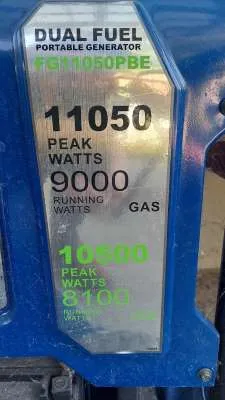
My generator with 9,000 running watts and 11,050 peak watts.
So if you’re planning on powering your home with a generator, you’ll need to think of how many lights will be on, any appliances you’ll be using like a refrigerator or microwave, and any additional items such as laptops, TV’s, etc. This can easily get as high as 15,000 Watts if not more including starting watts.
Below are some common wattage estimates for common household appliances as listed by Home Depot.
Appliance
Running Watts
Refrigerator/Freezer
600-800
Electric Range
2,500
Electric Furnace
5,000-25,000
Central Air Conditioning
2,000-4,000
Water Heater
3,000-4,500
Water Pump
1,000-2,000
Window Air Conditioner
600-1,500
Sump Pump
1,500
Microwave
1,200
Coffeemaker
400-800
Electric Oven
5,000
Television
100-350
Laptop
500-2,000
Vacuum
700-1,400
Space Heater
1,250
Table Lamp
150
Wattage Summary
By combining all your appliance’s total watts and adding the largest starting watts, you can figure out exactly how many watts you need when selecting a generator. Make sure to always get a generator that gives you a little headroom in case you need to charge additional items, or your needs expand and you use more power. It’s better to have more power available then to get stuck in a situation where you cannot produce enough to meet demand.
Now that we know how many watts we need to supply to run all of our appliances we can select the type of fuel we plan on using. Depending on your location and availability of fuel, this option can be crucial.
Fuel Type: Diesel, Gasoline, and Propane
The main fuel sources for generators are diesel, gasoline, and propane. Each has its pros and cons, so it’s important to review the differences and figure out which option works best for you.
Diesel Generators
Diesel generators are very fuel-efficient compared to gasoline or propane, producing 138,700 BTUs/gallon. Gasoline produces 125,000 BTUs/gallon & propane 91,300 BTUs/gallon. Diesel is also typically cheaper than both gasoline and propane and requires less maintenance when compared to gasoline. Diesel is also less flammable than both gasoline and propane.
While diesel generators produce a lot of power efficiently and require less maintenance than gasoline, they are hard to get running below 15 degrees Fahrenheit and start facing difficulties at around just 40 degrees Fahrenheit. They are also much louder than gasoline or propane generators, and you might not be able to find diesel for sale at all gas stations.
Gasoline generators are a great option because they have a higher wattage output than propane, gasoline can easily be purchased at gas stations, and it is typically less expensive than a propane generator producing similar wattage.
However, while they produce more power they also require more maintenance and produce more emissions. Gasoline also has a shorter shelf life than diesel and propane, and storing large quantities is difficult and hazardous. So if you’re planning on using a generator for extended periods, a propane generator may be a better option. Gasoline generators also require oil changes more frequently than propane-powered generators.
Differences in power on my dual fuel generator with gas vs propane.
Propane generators are a great option if you want a generator that is quieter (typically), runs cleaner, and you want a generator that can be connected to a larger fuel source. Propane also has a very long shelf life, which is great for those times when you may not be able to travel and get to a gas station for a refill. Propane generators also do not have issues with starting in cold conditions, unlike diesel and gasoline. However, propane produces fewer watts and is less efficient than gasoline or diesel.
Since propane is also clean-burning, the oil stays cleaner longer meaning your generator will require less maintenance compared to a gas-operated generator. Propane generators do however cost more initially and propane typically costs more per gallon than gasoline.
As you can see, there are a lot of variables when it comes to selecting a fuel type. If you’re somewhere where it can get below freezing, or even below 0, you’re going to want to avoid a diesel or gasoline engine and want to select a propane or hybrid model. If refueling propane is not an option, and you are unable to get propane service to your location, you will want to select a diesel or gasoline generator. And lastly, if you have access to diesel and are not somewhere that is below freezing for most of the year, diesel will give you the most bang for your buck.
Now that you’ve figured out the best fuel source for your needs, you’re ready to go!
You’re Ready To Select An Off Grid Generator
Hopefully now with all this information, you’re ready to select the generator that works best for you. Or at least now you have a better understanding of the differences in some generators, and why certain sizes and fuel types have their pros and cons.
To reiterate the steps in choosing the right sized generator for your need:
Figure out the purpose of your generator
Figure out how many watts you need, including starting watts
Figure out which fuel type works best for your situation
I hope you found this information helpful, and if you have any questions or recommendations please feel free to reach out. I strive to give the most accurate information I have, so if you see an error please let me know and I’ll be quick to address it. Have a great day and God Bless!
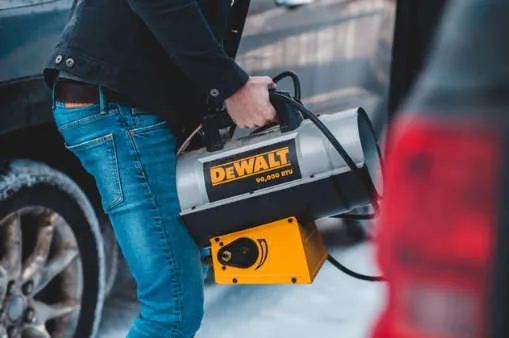
A propane heater is an efficient and inexpensive way to heat a room or space that is cold, whether that’s inside your garage or at an outdoor event, and it’s safe. Unlike electric heaters, propane heaters can easily be transported without requiring an outlet or battery to use. Most propane heaters can also be attached to smaller, lightweight 1lb propane tanks for portability.
Is Using A Propane Heater Indoors Safe?
Yes. Using a propane heater indoors is perfectly safe if you practice safe handling procedures. A properly working propane heater will burn clean and not produce carbon monoxide. Do not place near combustible material and keep it in a well-ventilated area. Make use of an additional Carbon Monoxide monitor for added safety.
All flames require three components in the right amount to burn: Fuel, Oxygen, and Heat. Removing any one of these elements will extinguish a flame.
It is important to have an abundant supply of oxygen in the room so the flame does not go out, or else the room will slowly fill with propane gas.
For this reason, it is important when deciding on which propane heater to buy to choose one that fits your size of the room. If you will be in an enclosed space make sure to purchase one that features an Oxygen Depletion Sensor (ODS). Ax Oxygen Depletion Sensor will automatically shut off the supply of propane to the heater if the room’s oxygen level drops too low.
Other safety features you should look for in a propane heater for enclosed spaces such as rooms, RV’s, cars, and tents include an accidental tip-over safety shut-off feature, overheat protection, and a heater with a high-temperature resistant guard in front of the heating element.
For additional safety, you can find a heater labeled with “UL certified”. UL provides testing for combustible materials and appliances to ensure they meet the highest of standards for safety.
Possible Dangers Of Using Propane Heaters Indoors
While propane heaters are safe to use indoors, there are always dangers with open flames and combustible materials. If you practice safe handling and follow your heater’s operation instructions you shouldn’t have anything to worry about. Some possible dangers include:
Oxygen Depletion In Enclosed Spaces
Any flame burning in an enclosed space will reduce the amount of available oxygen in the room. If the amount of oxygen drops too low, you risk the chance of passing out. Luckily, most portable propane heaters come with an Oxygen Depletion Sensor which will automatically shut off the supply of propane to the heater, turning it off.
The air we breathe is typically composed of 21% Oxygen and depending on the model of the heater, the Oxygen Depletion Sensor will shut off the supply of propane if Oxygen levels drop below 18%.
To ensure you do not risk any issues with oxygen depletion make sure to purchase a model that features an ODS, and if you can make sure to have an open vent to allow oxygen in the room.
Carbon Monoxide Poisoning
One of the major concerns with any heater or appliance burning fuels is the production of Carbon Monoxide. A propane burner typically burns clean and does not release carbon monoxide, however, incomplete combustion will produce carbon monoxide that will slowly fill the room you are in.
If your propane heater ever has a flame that is not blue, such as yellow or orange, immediately stop using the heater and have it serviced.
A flame that is not blue means the propane is not fully igniting and there is a problem with your heating unit.
Starting A Fire
Make sure to place your heater far away from any combustible materials, and that you regularly clean off your heater from particulate matter such as dust. Propane heaters should never be covered by anything, such as clothes or a blanket. If you’re using a wall-mounted propane heater make sure it is not on a wall that has combustible material.
Never leave your heater unattended and make sure to turn it off when not in use.
Using A Propane Heater for Camping
Can you use a propane heater in a tent? Yes! Propane heaters are great for camping, whether you’re in a tent or RV. Similar to an enclosed space, make sure your propane heater has the right safety features such as an Oxygen Depletion Sensor and accidental tip-over safety shut-off feature.
You may also want to purchase an additional carbon monoxide sensor for added safety. These can easily be placed near where you sleep and will alert you if too much carbon monoxide is in the room.
Because you are in a smaller space it is important to take extra precautions when using a propane heater to stay warm.
Make sure to place the heater opposite your entry/exit point
Keep combustible materials away from the heater as best as you can
Never sleep directly next to your heater. Try to have something separating you and the heater in case you roll over and hit it.
Make sure the heater is not touching your tent or resting against any material, it should have open space around it
Propane tanks come in many sizes and can have different units of measurement making it confusing to understand how many gallons are actually inside the tank. Some of the smaller and more common sizes are referred to by the weight of propane they contain rather than gallons, such as a 20lb propane tank which you will commonly have around a house for BBQs, heaters, etc. A 20 lb propane tank contains 4.7 gallons of propane and weighs just under 40lbs when full. Larger sizes that have more extensive use like supplying energy for a home such as 250 gallons and 500 gallons are measured by their total gallon capacity and not the amount of propane inside.
Regardless of propane tank size, all tanks are only filled to around 80% of their total size. This can lead to some confusion on exactly how much propane is inside a tank. This can be crucial if you’re trying to calculate how long your tank can last you and when you’ll need to refill, as well as figuring out the total weight of the tank.
To further add to this confusion, some propane suppliers such as Blue Rhino & Amerigas only fill their 20lb propane tanks to 15 lbs of propane. So if you’re exchanging a tank with these companies, you’re tank is only being filled to roughly 66% of its total capacity as opposed to the full 80% that is legally allowed. I’ll expand on this further below.
Propane Gallon Calculator
Below I have created a calculator you can use to figure out how many gallons of usable liquid propane is inside your propane tank.
Calculate Gallons of Propane in a Lb Tank
Enter either your propane tank size to calculate how many gallons of usable liquid propane it contains, or enter the desired gallons to calculate what size tank you need.
Note:This calculator is only for propane tanks measured by their weight (20lb,40lb,etc.) Measuring propane tanks that are identified by their total gallon capacity, such as 120 gallon or 500 gallons, will give an inaccurate answer.
Portable Sizes (Measured in Lb.s)
Listed below are the common sizes of propane tanks and their respective level of propane in gallons. Remember smaller sizes are measured by the weight of propane it contains.
Propane tanks labeled by their weight typically have ~23% of their labeled weight in gallons of propane. (ex. 20lb propane tanks have 4.7 gallons of propane)
Tank Size
Gallons Usable
Total BTU
1lb
0.23
21,045
2lb
0.47
43,005
5lb
1.17
107,055
10lb
2.35
215,025
15lb
3.52
322,080
20lb
4.70
430,050
30lb
7.05
645,075
40lb
9.40
860,100
50lb
11.75
1,075,125
Household Sizes (Measured in Gallons)
Lastly, listed below are the more common sizes of propane tanks for household use and their respective level of propane in gallons. Larger tanks like these usually are not referenced by their weight in propane but by total gallon storage. But remember that propane tanks are never filled more than 80% so there is still some difference in the tank size and actual amount of propane inside.
Propane tanks labeled by their gallon capacity typically have ~80% of their labeled capacity in gallons of propane. (ex. 500 gallon tanks hold 400 gallons of propane)
A gallon of propane contains roughly 91,500 BTU. This can be useful to know if you need to calculate how many total BTUs your propane tank contains so you can figure out how long it can run an appliance. For example, if you wanted to figure out if a full 20lb propane tank could run a 15,000 BTU pizza oven at an event you could calculate how many BTUs the tank has and how many BTUs the oven consumes per hour to find out if you’ll need to refill.
The calculation would be:
(20*0.235*91,500)/15,000=28.67
So a 20lb propane tank can run a 15,000 BTU pizza oven for 28.67 hours.
Propane Tank Running Time Calculator
Below is a simple calculator I made to help you determine how long a propane tank can run any BTU size appliance. Please note this calculator is only intended for tank sizes marked by the weight, and will not work for larger propane tanks measured by their total gallon capacity. For more information on how long a propane tank can last, check out my article “How Long Does A Propane Tank Last? (And How to Check How Full It Is)“.
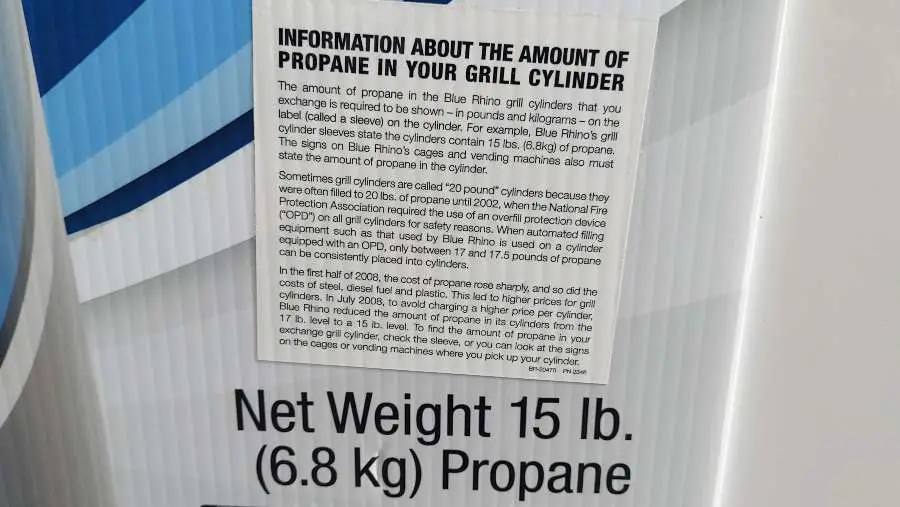
As I mentioned at the beginning of this article, both Blue Rhino and Amerigas only fill their propane tanks to 15 lbs of propane, even though the legal limit allows them to be filled to ~20 lbs. While most propane suppliers only fill to 17-19 lbs, Blue Rhino and Amerigas go even further only filling your propane tank to roughly 66% of its total capacity.
The reason Blue Rhino gives for this is that in 2002 when the OPD valve was introduced, which reduced the capacity of the tank by 20% for safety reasons, Blue Rhino reduced the amount of propane they filled tanks to only 17 lbs. And then during the 2008 financial crisis, the prices of propane, steel, diesel fuel, and plastic all rose sharply and in order for them to offer the same product at the same price, they had to reduce the amount of propane in their tanks to only 15 lbs.
The label on a Blue Rhino exchange tank cage stating why their propane is only filled to 15 lbs.
However, even after all this time, and including price increases on their end, they still only fill their propane tanks to 15 lbs, even though they can legally fill the tanks to ~20 lbs. So with this in mind, be aware that when you are exchanging a propane tank you may not be getting the full amount of propane your tank can legally hold.
To ensure you are receiving the maximum amount of propane for the best price, it is always recommended to have your tank refilled as opposed to exchanged. Refilling is cheaper per gallon, and you also receive more fuel allowing your propane tank to last much longer between fills.
Generators can be loud and if you’re running one for multiple hours it can become a distraction. Whether you’re using a generator for powering your home, while on a work site, or camping, no one likes a loud generator around them. So when you’re choosing your generator, the type of fuel can come into play as each fuel type produces varying amounts of noise. And if you’re choosing an off-grid generator, you may opt for propane as you can connect it to larger tank sizes.
Are Propane Generators Quieter Than Gas
Typically, propane generators run quieter than gasoline-powered generators, but only by a marginal amount and at the cost of reduced power output. See my recommendation below for the quietest generator (which isn’t propane).
At 20 feet away, a 7kW gasoline-powered generator puts out around 77dB.
At 20 feet away, a 7kW propane generator puts out around 68dB.
This is equivalent to the noise produced by a truck vs a small car.
Many factors go into how loud a generator is, such as the make, model, age, and size of the generator. Some generators such as Honda’s Super Quiet series can operate as low as 50dB while running on gasoline. The older a generator is the more likely it will run louder. Newer models of generators are typically quieter and more fuel-efficient while also being capable of producing more power. Good maintenance on a generator can also help make it quieter, so if you have a generator that is running louder than usual, try changing the oil and cleaning it. Generators that include an inverter typically run quieter also since they adjust the engine speed based on power demand.
As an example, a normal talking conversation is around 60dB, a vacuum 75, a lawnmower 90, and a motorcycle is around 100. So for a generator to be as quiet as 50dB is pretty amazing!
If the level of noise a generator makes is a priority for you, your budget will be the main factor on whether you decide to choose a propane generator or Honda’s Super Quiet series which runs on gasoline. While these models run on gasoline, they are quieter than most propane generators.
However, the initial cost of these models is a lot higher than most propane generators with a marginal difference in noise output. You may want to choose a propane generator that can run at a similar decibel range at a much lower cost while also outputting similar wattage.
The Quietest Generator Available (It’s NOT Propane)
Surprisingly, one of the quietest generators currently available is a gasoline-powered generator. The Honda EU1000i is part of Honda’s Super Quiet series which utilizes special sound-dampening materials and quiet Honda engines to reduce noise.
However, this model can only output 1000 watts, which is only suitable for powering small appliances such as a microwave and TV. The next quietest generator comes from Generac and is also gasoline, the Generac IQ3500 which produces 3,000 watts and outputs around 50 to 57 dBA which is suitable for most household applications. It can easily power your heat, fridge, and AC units (up to 13,500 BTU), but not all at the same time.
A comparable propane generator that runs at a low noise level is the A-iPower SUA2000iD 2000 Watt which outputs around 52dB. Since this unit also puts out around 2,000 watts it’s a great middle-ground between the Honda EU1000i and Generac IQ3500.
Are Propane Generators Better Than Gas?
Each type of fuel has its pros and cons (See Propane Generator Pros and Cons). Gas produces more power but also more noise and pollution. Propane produces less power but runs quieter and doesn’t produce as much pollution, it also has a much longer storage life, and is extremely safe to use.
Gasoline is great if you require high energy output for a short time, but due to storage limitations, it is not great for multi-day use. A generator running on a natural gas line or connected to a larger propane tank such as a 500 gallon tank could run continuously for days.
These are great for scenarios where the is a power outage that will last for more than a day, or for locations that have a large tank and cannot be refueled with gasoline easily, such as a cabin.
Propane is also a much cleaner fuel, in terms of the environment and just the mess around handling it. You’ll never accidentally spill propane and make a mess.
Typically, gasoline is easier to find. If you’re using a generator on an RV, you’re going to be stopping at gas stations where you can refuel both your RV and generator. Not every gas station will be able to refill your propane tank for you, or have exchanges available.
6 Tips To Reduce Generator Noise
You’ve got your generator now but it’s still a little too loud. Here are some additional ways to reduce the noise created by your generator.
Move the generator as far away as you can. Use a long extension cord to bring the power to you. This is also advisable as it moves the fumes away from you.
Face the exhaust pipes or engine air vents away from your direction, a lot of the noise produces comes from this side of the generator.
Tighten all bolts and screws on the frame – frame rattling is a large noise amplifier
Place the generator inside a shed or other enclosure (But make sure it’s vented). For long-term use, I would definitely recommend building a shed to cover your generator as well as keep it out of extreme conditions.
Install an aftermarket muffler that is larger. You can purchase additional mufflers that reduce the noise produced, however be advised that most warranties are void if any modifications are done to the generator.
Place on a sound-absorbing mat. You can purchase sound-absorbing mats online that will reduce the noise of generators.
Utilizing some or all of these tips should greatly reduce the noise your generator produces.
I hope this information will be helpful to you, and please reach out if you have any questions, I am always happy to answer them!